

Library

Anchor University Library

Current physical and electronic information resources supporting teaching, learning and research across the University.

About the Library

Brief history and background

The Anchor University Library was established on 20 February 2017. Located in the basement of the Administrative Block, the Library is equipped with current physical and electronic information resources to support the University's existing and prospective academic programmes. In keeping with the University's Total Man Concept, the Library also maintains a spiritual development section containing resources on Christian theology and publications by the University's Chancellor. The Library provides a well-lit, air-conditioned and serene environment that supports reading, study and research.

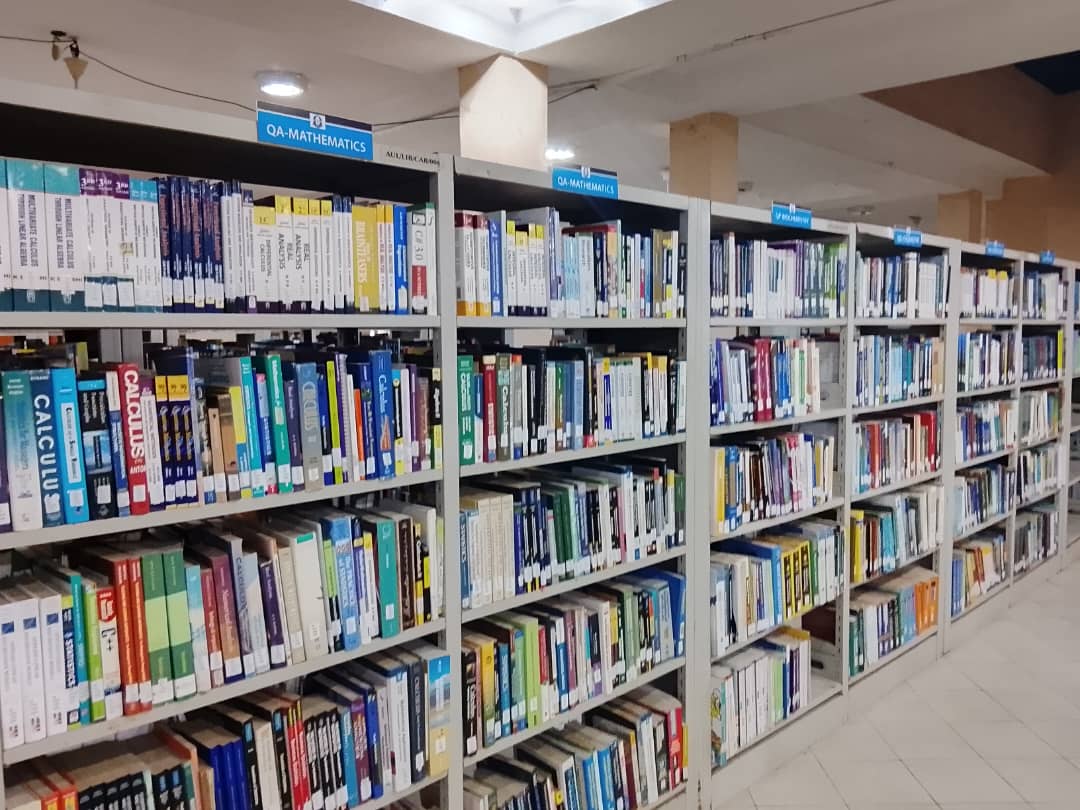
Rows of book shelves in the main library
Main Library Collection

Vision

To become a world-class reference and resource centre providing relevant, current and retrospective information that is accessible to all users, both physically and electronically.

Mission

To promote intellectual development by providing students, lecturers, researchers and non-teaching staff with efficient access to quality and relevant information through electronic databases, e-journals, e-books and print resources.

Objective

The primary objective of the Anchor University Library is to support the University's mandate of teaching, learning and research by providing students, lecturers and researchers with access to relevant and up-to-date information resources.

Core objectives and goals

01

Resource Development

Build, preserve and maintain information resources across the University's academic programmes.

02

Information Literacy

Support students, faculty members and researchers in developing the information skills required for learning and academic success.

03

Digital Access

Provide access to digital resources and contemporary information technologies.

04

Conducive Environment

Provide a suitable, user-centred environment for intellectual development and library services for the University community and authorised external scholars.

Dr Fagbola Bolanle Oluyemisi, University Librarian
Library Leadership

Dr Fagbola Bolanle Oluyemisi

University Librarian

Dr Fagbola Bolanle Oluyemisi is the University Librarian at Anchor University. She received the Fellowship Award of the Council for the Development of Social Research in Africa in 2008 in recognition of her scholarly contributions to research and academic development in Africa.

Read full profile

During her sabbatical appointment at the University of Ibadan from September 2017 to August 2018, she served as Faculty Librarian for the Faculty of Pharmacy and as Collection Development Librarian. In these capacities, she provided academic support services, organised training programmes for lecturers and students, and collaborated with faculty members in preparing the Library for accreditation of academic programmes by the National Universities Commission.

In 2020, Dr Fagbola successfully completed the Research4Life Open Course covering the AGORA, GOALI, HINARI, ARDI and OARE databases. She has also participated in professional training programmes and workshops in librarianship and information management.

Dr Fagbola holds a Bachelor of Arts (B.A. Hons.) degree in Russian, a Master of Library Studies (MLS) and a Doctor of Philosophy (PhD) in Library and Information Science, all from the University of Ibadan. She is a certified librarian with the Library Registration Council of Nigeria and a member of several professional bodies, including the Nigerian Library Association, the International Society for Horticultural Science, the International University Network on Cultural and Biological Diversity, and the Association of Behavioural Research Analysts and Psychometricians.

She has authored and co-authored numerous scholarly publications in local and international journals. Her research interests include textbook evaluation, library services, bibliometrics, digital librarianship, information and communication technologies (ICTs), bibliotherapy and indigenous knowledge systems.

Key library personnel

  • Mr Ogboko ChristianAssistant Chief Library Officer
  • Miss Akinleye EstherAssistant Librarian
  • Mr Adeegbe EmmanuelAssistant Librarian
  • Mrs Adeniran YejideLaw Librarian
  • Mr Nwachi GodswillSenior Library Officer
  • Miss Idowu BolanleHigher Library Officer
  • Mr Airende StephenHigher Library Officer
  • Mr Ayansola RufusHigher Library Officer
Teaching, Learning & Research

The Library's role in teaching, learning and research

The Anchor University Library serves as a knowledge hub that supports the University's core academic functions of teaching, learning and research. It provides lecturers and students with instructional resources, reference materials and digital tools that complement classroom teaching, curriculum delivery and lesson preparation. The Library also develops information and digital literacy by helping users locate, evaluate, use and appropriately cite credible academic sources.

The Library further supports critical thinking by helping users identify bias, recognise misinformation and navigate digital databases safely. Access to computers and high-speed internet also enables users to engage with contemporary academic resources and digital learning tools.

  • Providing teaching and learning resources, including textbooks, reference materials, journals, e-books, databases, newspapers and other scholarly resources.
  • Supporting lecturers in lesson preparation through access to current literature for lectures, course materials, assignments and other instructional content.
  • Providing information literacy education to help students identify, locate, evaluate, use and properly cite reliable information.
  • Supporting curriculum delivery by complementing prescribed course materials and enabling users to explore subjects beyond classroom discussions.
  • Preserving and providing access to institutional knowledge through repositories and archival collections containing theses, dissertations, publications and other scholarly works.
  • Supporting individual and group learning through reading spaces, discussion areas, study facilities and other resources that encourage independent and collaborative learning.
  • Supporting research-based teaching by providing access to scholarly publications and research databases that enable lecturers to incorporate current research findings into teaching.
Services

Library services

The Anchor University Library provides a range of services designed to support teaching, learning and research across the University community.

Borrowing and Circulation Services

Students and lecturers can borrow library materials in accordance with the Library's lending procedures. For manual borrowing, users should identify the required book, check its condition, present a valid Library identity card, complete the loan documentation and confirm the due date. Library identity cards must not be used by other persons.

Reference Services

Library staff assist users with reference and information enquiries, collection arrangements and research-topic searches. Users are also guided on how to make effective use of the Library's reference resources and services.

Research Support

The Library provides access to books, databases, journals, digital archives and other scholarly resources, including specialised academic databases.

Information Literacy

Library staff help students develop the skills required to identify, locate, evaluate, use and appropriately cite information for academic and research purposes.

Inter-Library Services

The Library liaises with other libraries to facilitate access to information resources that are not readily available within the University Library.

Current Awareness Services

Users are kept informed about newly acquired resources through displays and email updates. Selective dissemination of information is also provided to targeted user groups.

Bibliographic Services

The Library organises its collections using the Library of Congress Classification (LCC) scheme and catalogues information resources in accordance with established cataloguing procedures.

Research resources

Library resources

The Anchor University Library provides access to a range of print and electronic information resources across the University's academic disciplines. These include the Online Public Access Catalogue (OPAC), research databases, e-journals, e-books, legal resources and open-access scholarly resources.

  • Anchor University Library Online Public Access Catalogue (OPAC)
  • Research4Life (AGORA, ARDI, HINARI, GOALI and OARE)
  • JSTOR
  • LawPavilion Primsol (Local)
  • Nigerian Weekly Law Reports (Local)
  • LexisNexis (Foreign)
  • AJOL (African Journals Online)
  • DOAJ (Directory of Open Access Journals)
  • ScienceDirect
  • Emerald
  • Wiley Online Library
  • Springer Journals
  • Taylor & Francis Online
  • PubMed Central
  • IMF e-Library
  • BMJ Publishing Group
  • Royal Society Journals Collection
  • INTECH
  • BIOONE
  • Nature
  • BMC Journals
  • Central Bank of Nigeria Library / Open Knowledge Repository
  • ProQuest
  • Open Access Theses and Dissertations
  • Virtual Learning Resources
  • Academic Journals
  • The Free Library
  • Bookboon
  • Elsevier
  • BookRix
  • Complutense Journal of English Studies

Other subject-specific resources in the sciences, social sciences, humanities, law, languages and health-related disciplines.

Facilities

Library facilities

Reading Areas

The Library provides designated reading and study areas where students and other authorised users can undertake individual academic work in a quiet and conducive environment. These spaces support regular study, examination preparation, assignment writing, literature reviews and other academic activities.

Research Spaces

Dedicated spaces support students, lecturers and researchers undertaking academic and scholarly work, including literature searches, consultation of reference materials, project and thesis work, and academic writing.

Discussion Rooms

Discussion spaces facilitate academic discussion and collaborative learning. Students can use these spaces for assignments, group projects, presentations, seminars and related academic activities.

ICT Facilities

ICT facilities enable users to search for information, access electronic resources, conduct research and prepare academic materials. They support access to databases and e-journals, online information searching, e-books and other digital resources, academic research and project work, document preparation, online learning and relevant Library and University information services.

Internet and Wi-Fi Facilities

Internet connectivity supports access to online academic and research resources, including electronic books, journals and databases. It also facilitates communication, online learning and other legitimate academic activities.

Other Relevant Facilities

The Library provides a conducive academic environment, circulation services using the Browne system, serials and reference resources, print and electronic information resources, research support, catalogue and information-search facilities, access to e-books and e-journals, and user guidance and Library orientation.

Serials and subject coverage

The Library provides journals, periodicals and other continuing publications supporting disciplines including Accounting, Architecture, Anatomy, Applied Geophysics, Finance, Biochemistry, Biology, Biotechnology, Business Administration, Chemistry, Christian Religious Studies, Computer Science, Economics, Education, English and Literary Studies, French, Geology, History and International Studies, Industrial Chemistry, Information Technology, International Relations, Law, Mass Communication, Mathematics, Medical Laboratory Science, Microbiology, Nursing Science, Physics, Physics with Electronics, Physiology, Political Science, Public Health and Software Engineering.
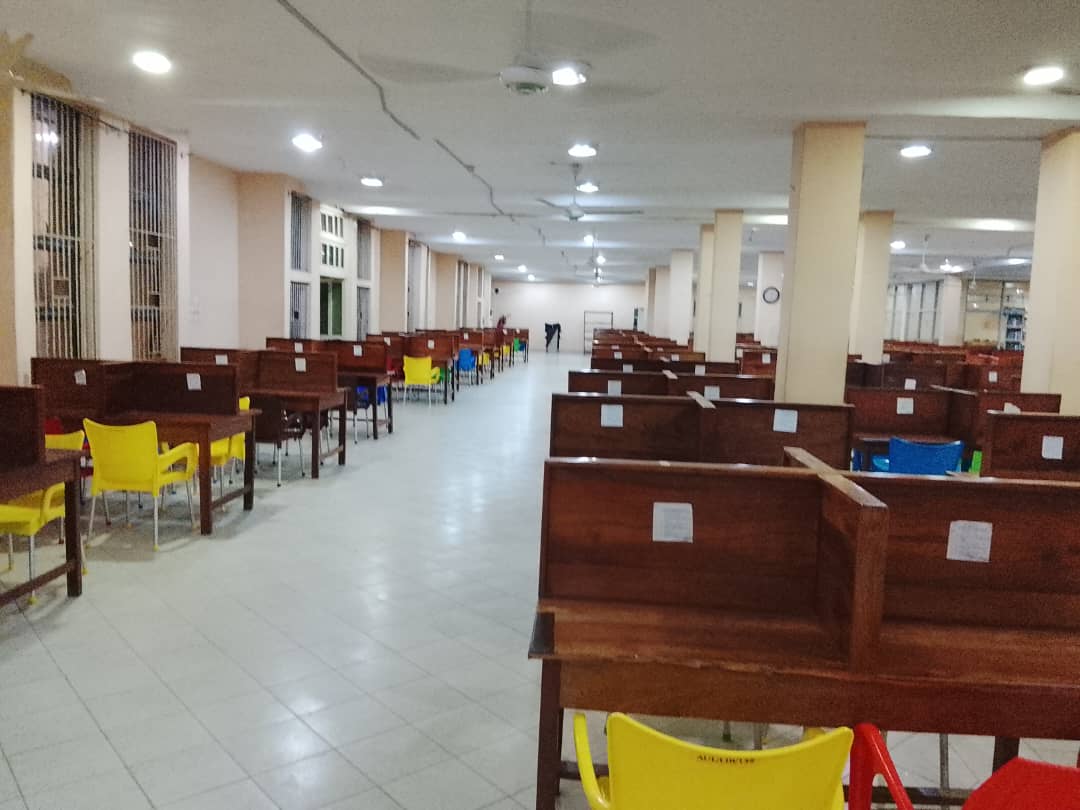
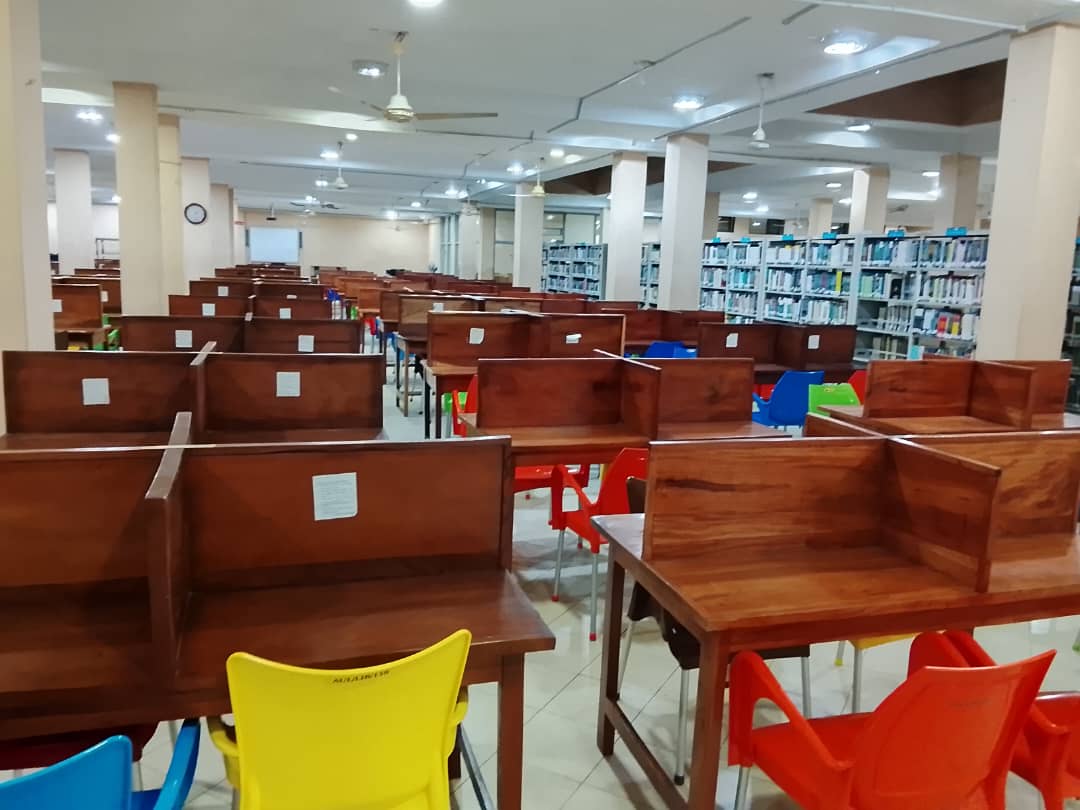
Long rows of wooden study desks in the main library
Reading area
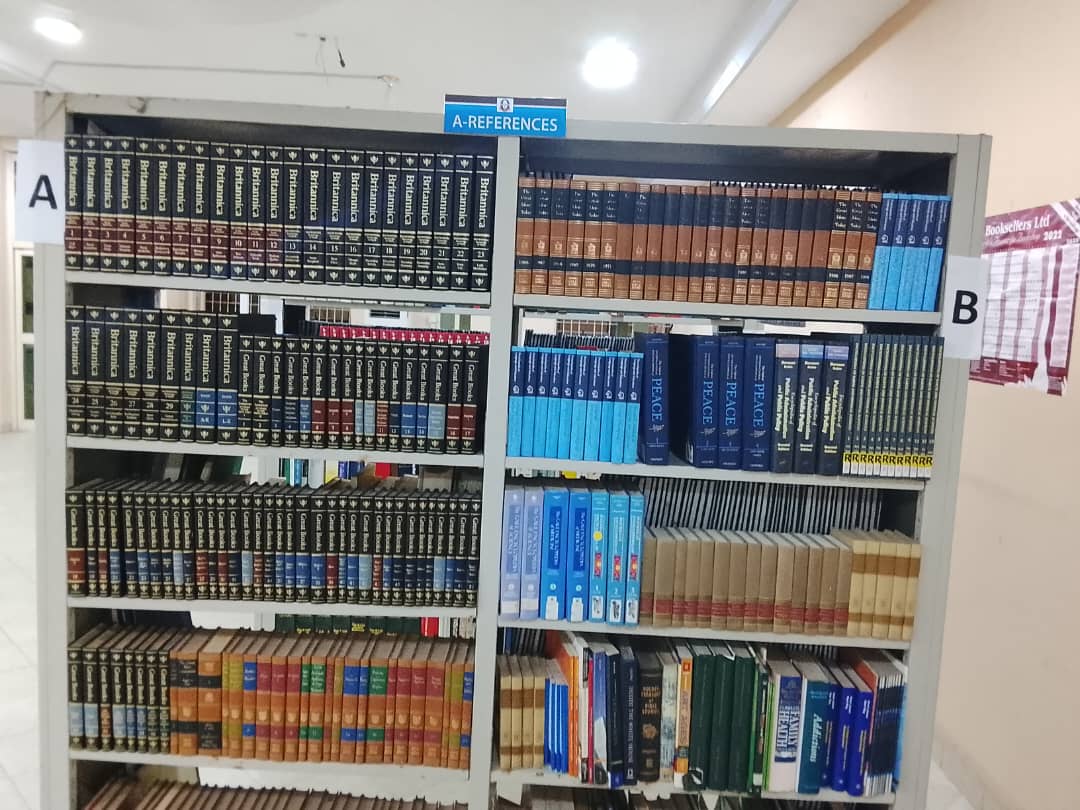
Reference shelves of bound volumes in the main library
Reference shelves
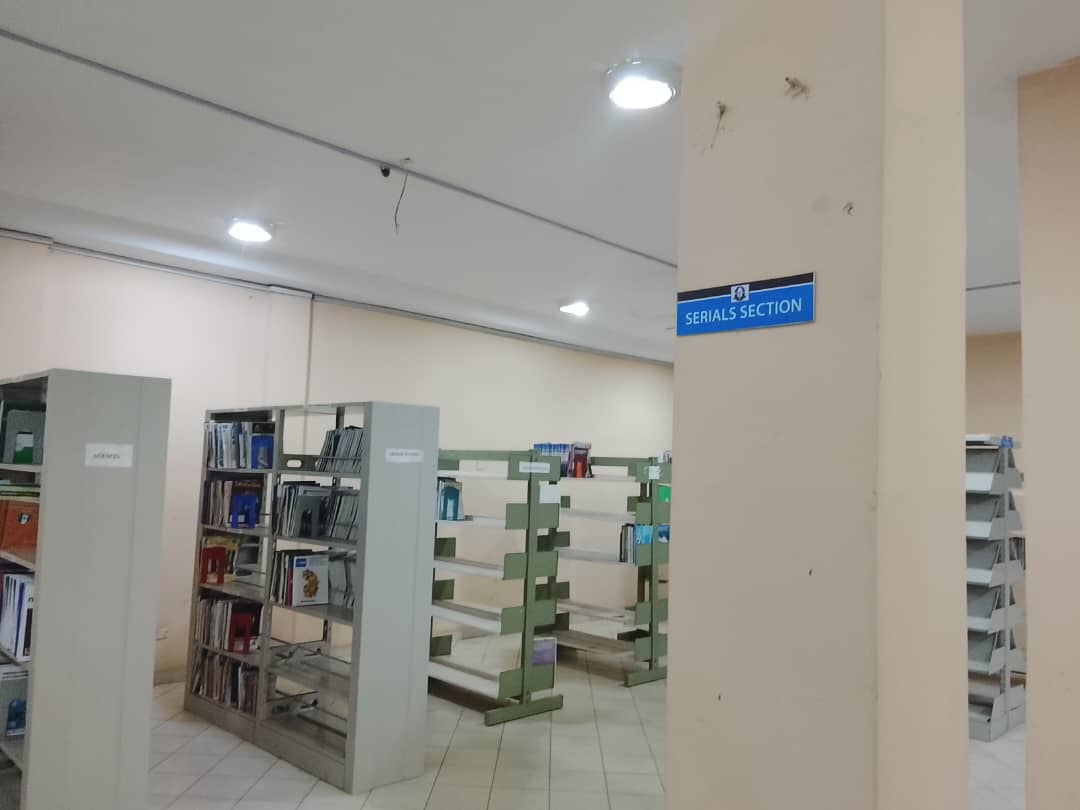
Shelving under the Serials Section sign in the main library
Serials section
Study desks in front of open book stacks in the main library
Reading and study area
Branch libraries

Branch libraries

The University has three functioning branch libraries serving specialised academic needs.

Law Library

The Law Library is a specialised information centre supporting legal education, research and professional development. Located within the Faculty of Law building, it provides access to textbooks, law reports, journals, reference materials, electronic databases and other relevant digital resources for Law students, lecturers, researchers and other authorised users.
Services in the Law Library
  • Enrolment and maintenance of library-user records.
  • Lending and return of library resources.
  • Management of reserve materials for academic courses.
  • Organisation, cataloguing, classification and processing of newly acquired resources.
  • Proper shelving and routine shelf inspection.
  • Compilation of usage statistics and preparation of relevant reports.
  • Dissemination of information on newly acquired and relevant legal resources.
  • Personalised information services based on users' research interests.
  • Assistance with legal and general reference enquiries.
  • Photocopying, scanning, printing and other reprographic services.
  • Support for access to electronic legal resources, online databases and Internet facilities.
  • Guidance in locating and using appropriate legal information resources.
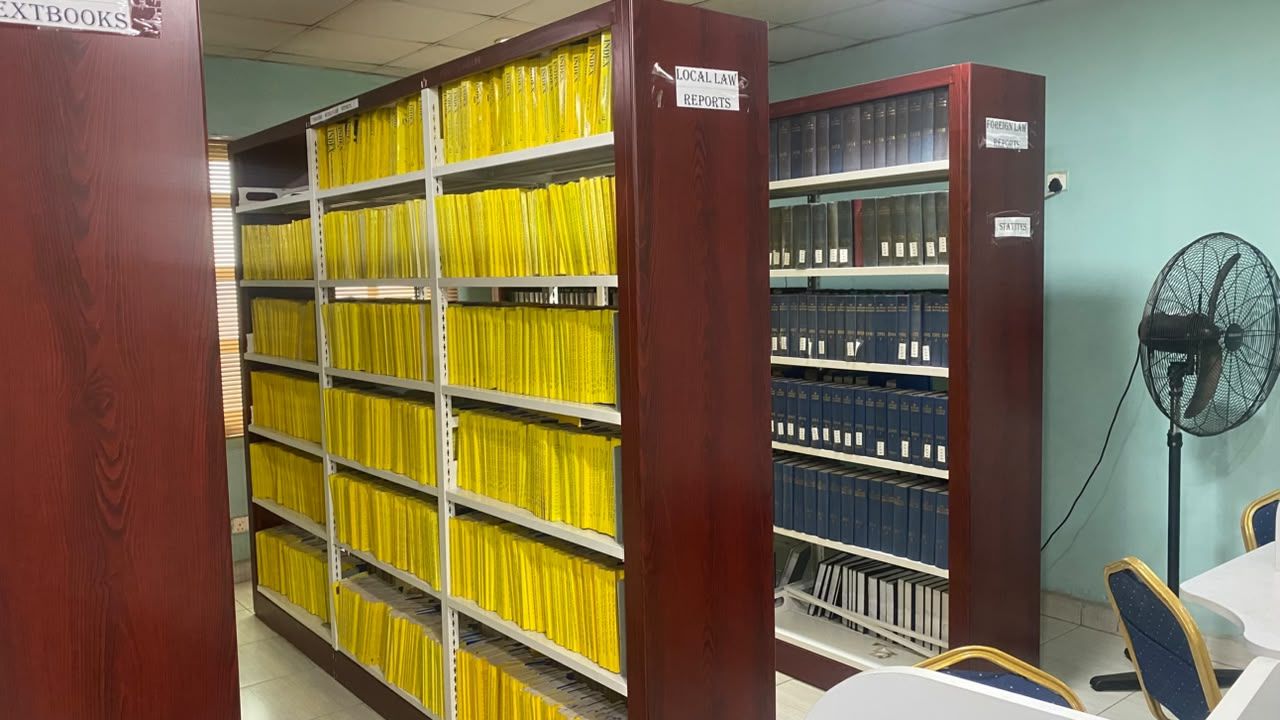
Shelves of local and foreign law reports and statutes in the Law Library
Reference Section
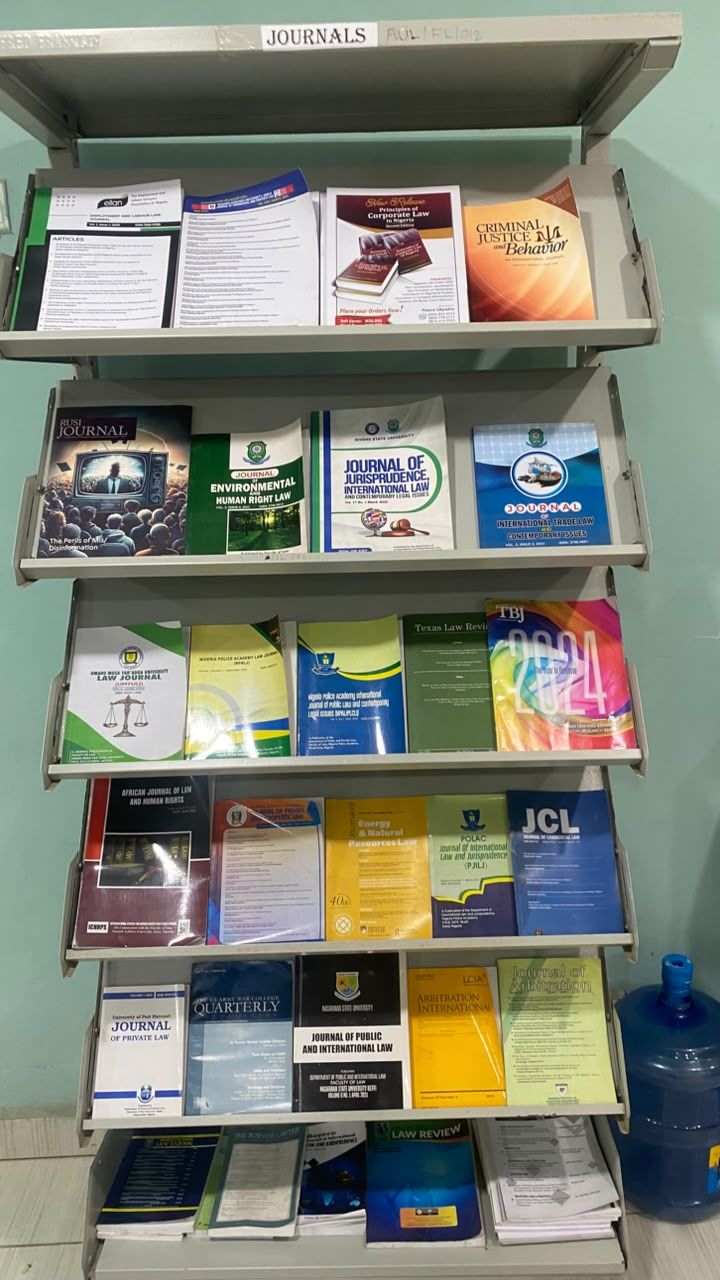
Display rack of law journals in the Law Library
Serial Publications
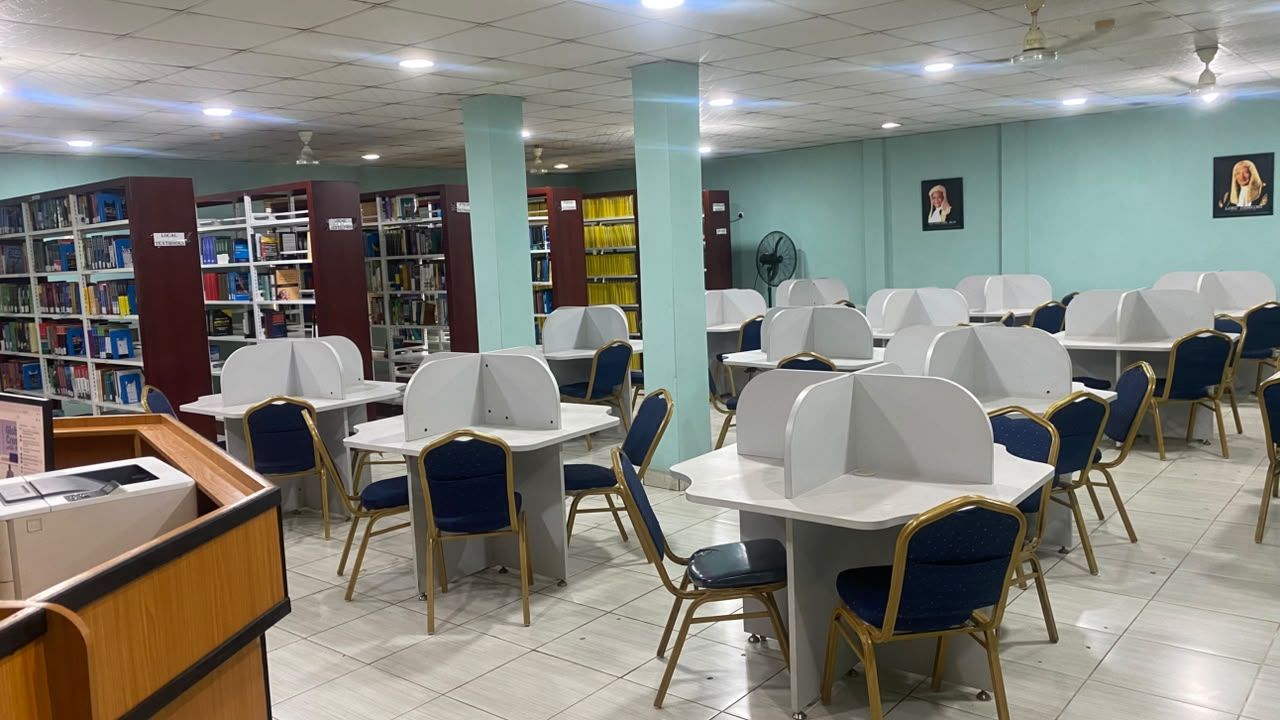
Study tables with privacy screens in the Law Library reading room
Reading Room
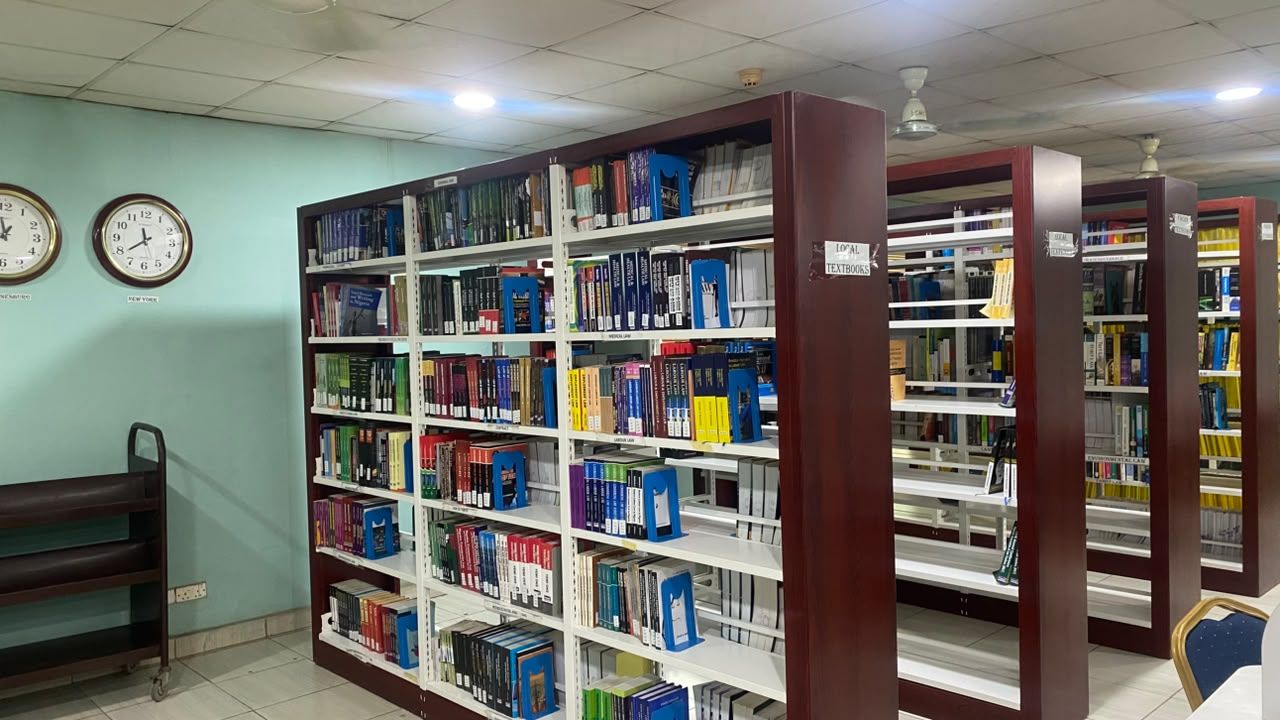
Law textbook shelves in the Law Library
Book Shelves
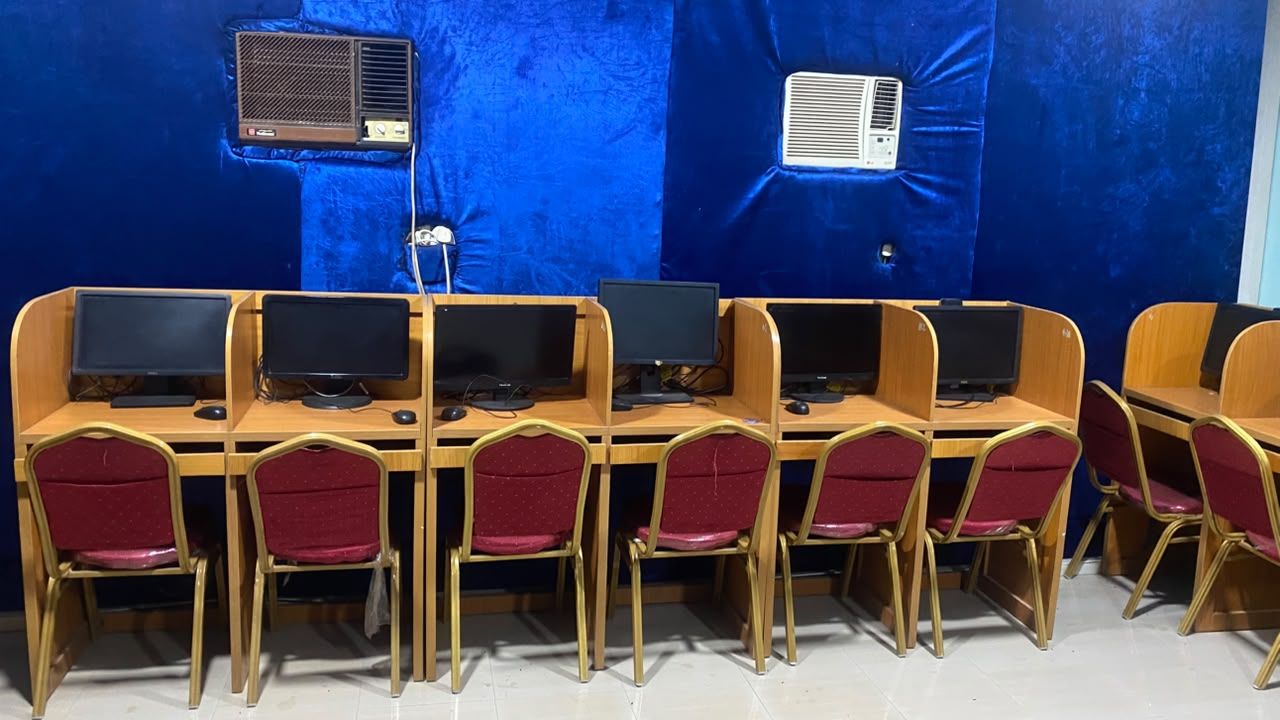
Row of computer workstations in the e-library
E-Library

Nursing Library

The Nursing Library is a specialised academic resource centre supporting teaching, learning, clinical education and research in Nursing and related health disciplines. Located within the Faculty of Basic and Allied Medical Sciences (FBAMS), it provides current and relevant resources in areas such as nursing practice, patient care, anatomy, physiology, pharmacology, public health, maternal and child health, and other allied subjects.

Services in the Nursing Library
  • Creating and maintaining membership records for eligible users.
  • Assisting users with borrowing and returning library resources.
  • Making prescribed and high-demand nursing materials available through reserve collections.
  • Receiving, organising and preparing newly acquired resources for use.
  • Ensuring that resources are properly arranged and returned to their designated locations.
  • Conducting periodic shelf inspection and stock arrangement.
  • Processing and making new nursing and health-related resources accessible to users.
  • Monitoring resource use and compiling relevant statistics.
  • Keeping users informed about new materials, databases and developments relevant to Nursing.
  • Providing targeted information services in support of academic and research interests.
  • Responding to enquiries and assisting users in locating appropriate nursing and health information.
  • Providing printing, photocopying, scanning and related document services.
  • Facilitating access to online journals, e-books, research databases and Internet resources.
  • Guiding users in effective information searching, retrieval and use.
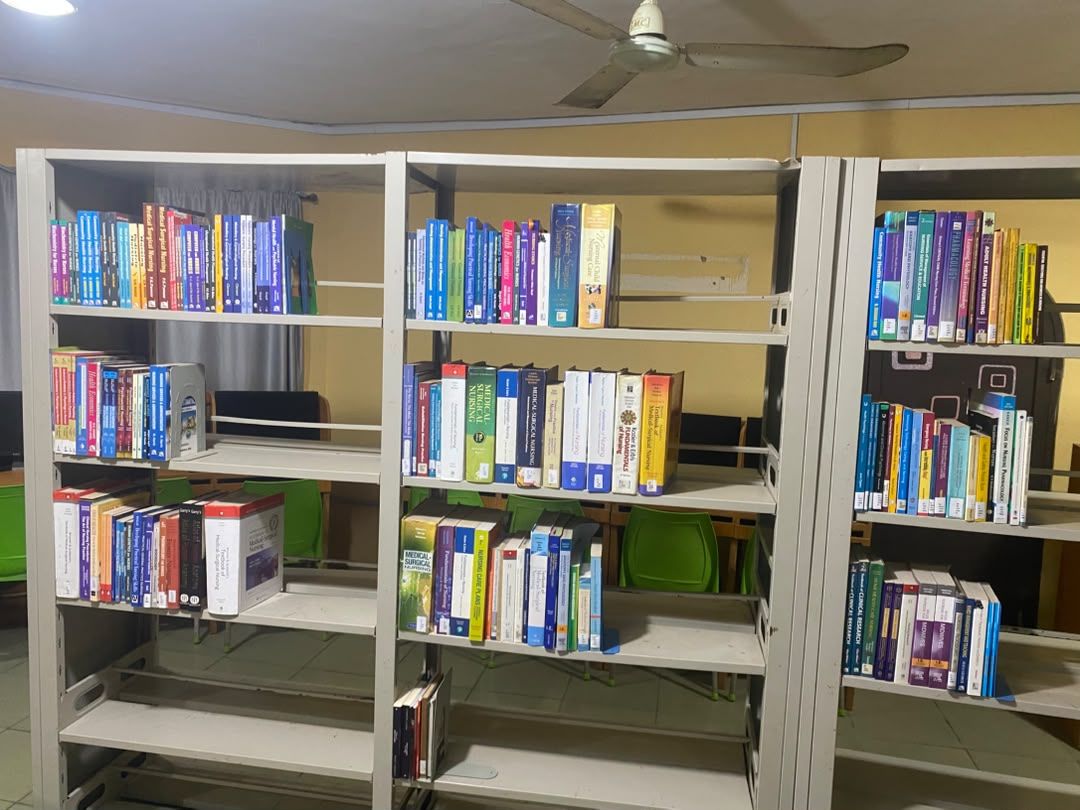
Shelves of nursing and medical-surgical textbooks
Nursing collection

Architecture Library

The Architecture Library is a dedicated academic resource facility supporting the study, teaching, design practice and research activities of the Department of Architecture. Its collection covers architectural design, building technology, construction, environmental studies, urban planning, landscape architecture, architectural history and related fields. Located within the Faculty of Environmental Sciences, the Library provides both physical and digital information resources for students, lecturers, researchers and other authorised users.
Services in the Architecture Library
  • Registering eligible users and maintaining accurate membership information.
  • Facilitating the circulation and return of library resources.
  • Coordinating access to frequently requested and course-related materials.
  • Preparing newly received books, journals and other resources for use.
  • Maintaining orderly arrangement of resources on the shelves.
  • Inspecting collections regularly to identify misplaced or incorrectly arranged materials.
  • Cataloguing and classifying new materials in accordance with established procedures.
  • Keeping resource-use records and producing statistical reports.
  • Promoting awareness of new publications, useful resources and relevant developments in Architecture.
  • Providing information services tailored to academic and research needs.
  • Assisting users with reference enquiries and identification of suitable information sources.
  • Providing printing, photocopying, scanning and other reprographic services.
  • Providing access to e-books, journals, databases, design-related information resources and the Internet.
  • Supporting students and researchers in locating, evaluating and effectively using information resources.
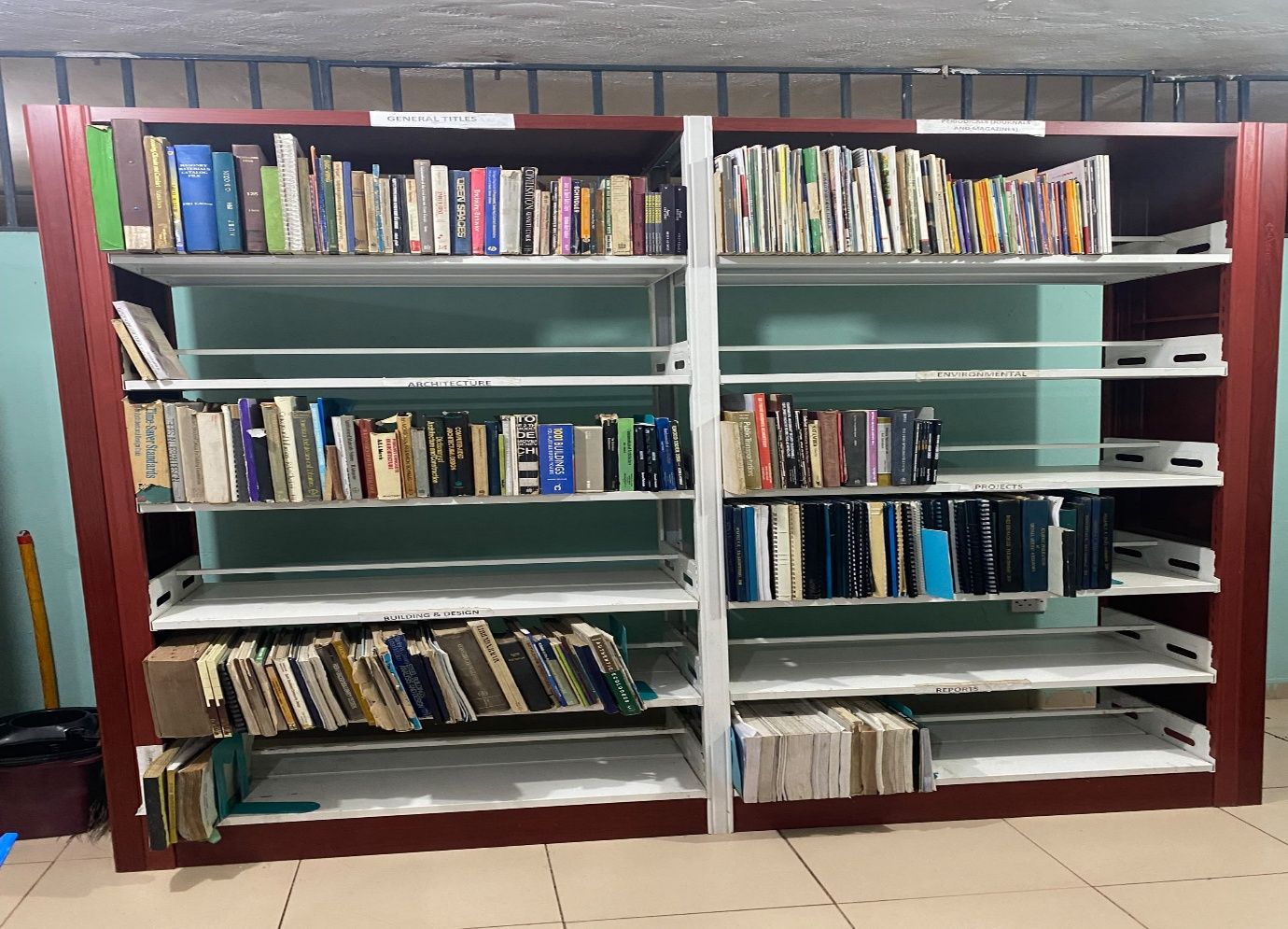
Shelves labelled Architecture, Building and Design, Environmental and Projects
Architecture collection
Rules & regulations

Library rules and regulations

The Library is a place for learning, study and research. All users are expected to observe the following rules and regulations:

  1. Opening hours are Monday to Friday, 9:00 a.m. to 9:00 p.m., and Saturday, 9:00 a.m. to 2:00 p.m.
  2. All Anchor University staff and students must register before accessing the Library facilities.
  3. Visitors must apply for permission to use the Library and pay any applicable stipulated fee.
  4. Borrowed books must be returned on or before the due date.
  5. Stealing, mutilation or deliberate damage to Library materials is prohibited and may attract disciplinary action.
  6. Users should consult Library staff whenever assistance is required.
  7. Silence must be maintained in the Library.
  8. Users should not re-shelve books after consultation; books should be left in the designated area for Library staff to reshelve.
  9. Mobile phones must be switched to silent mode or switched off to avoid disturbing other users.
  10. Laptops and personal computers should be used for legitimate academic purposes and must not be used for activities that disturb other users.
  11. Seats may not be reserved.
  12. Personal textbooks and books belonging to other libraries are not permitted unless authorised by the Library.
  13. Bags are not permitted in the Library.
  14. Library users may be subject to security checks at the exit point in accordance with Library procedures.
  15. Fighting or other disruptive conduct in the Library is prohibited and may attract disciplinary action.
  16. Photocopying of materials must comply with applicable copyright laws.
  17. Eating is prohibited in the Library.
  18. Users should keep the Library clean and dispose of waste in designated bins.
  19. Users should follow the instructions provided by the E-Library Unit regarding the use of electronic resources and facilities.
  20. Users must not mark, fold, tear or otherwise damage Library books, newspapers, magazines or journals.
  21. Smoking is prohibited in the Library.
  22. Conduct that deliberately distracts or disturbs other readers is prohibited.
  23. Lecturers may borrow up to two books for a maximum of one week, while students may borrow one book for a maximum of two days, subject to applicable Library policies.
  24. Lost borrowed materials must be replaced or paid for in accordance with the Library's current replacement and processing charges.
  25. Users are encouraged to seek legitimate access to e-books, e-journals and print resources through the Library.
  26. Only registered students and staff have access to the Library's collections physically or electronically, except where access has been authorised for external users.
  27. The Library uses the Library of Congress Classification (LCC) scheme for organising its collections.
  28. The Online Public Access Catalogue (OPAC) is used to facilitate discovery of Library materials.
  29. The Library collaborates with the Anchor ICT Centre in developing its portal and Internet facilities.
  30. All Library users must comply with the Library's Rules and Regulations.
  31. Faculty libraries may be established as needs arise, supported by appropriate inter-library cooperation.

Search tips

  • Enter words you know from the title, author or subject.
  • Use the search drop-down options to narrow or refine your results.
Visit & contact

Opening hours and contact

Opening hours

Monday–Friday
9:00 a.m. – 9:00 p.m.
Saturday
9:00 a.m. – 2:00 p.m.