

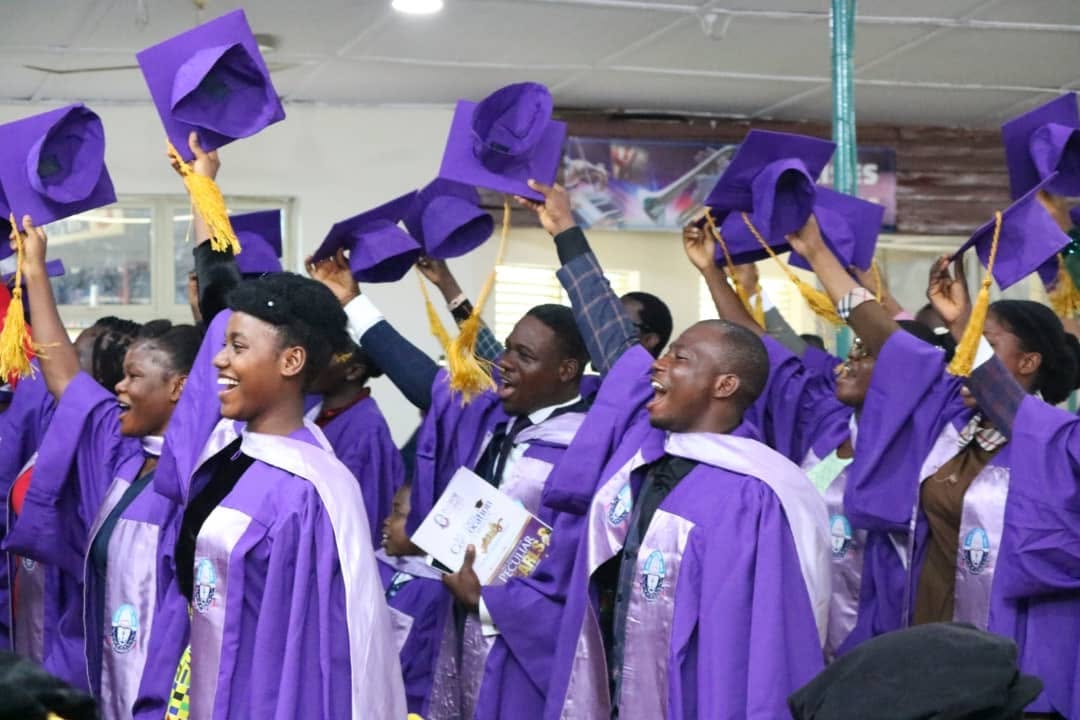

Undergraduates

Faculty of Science

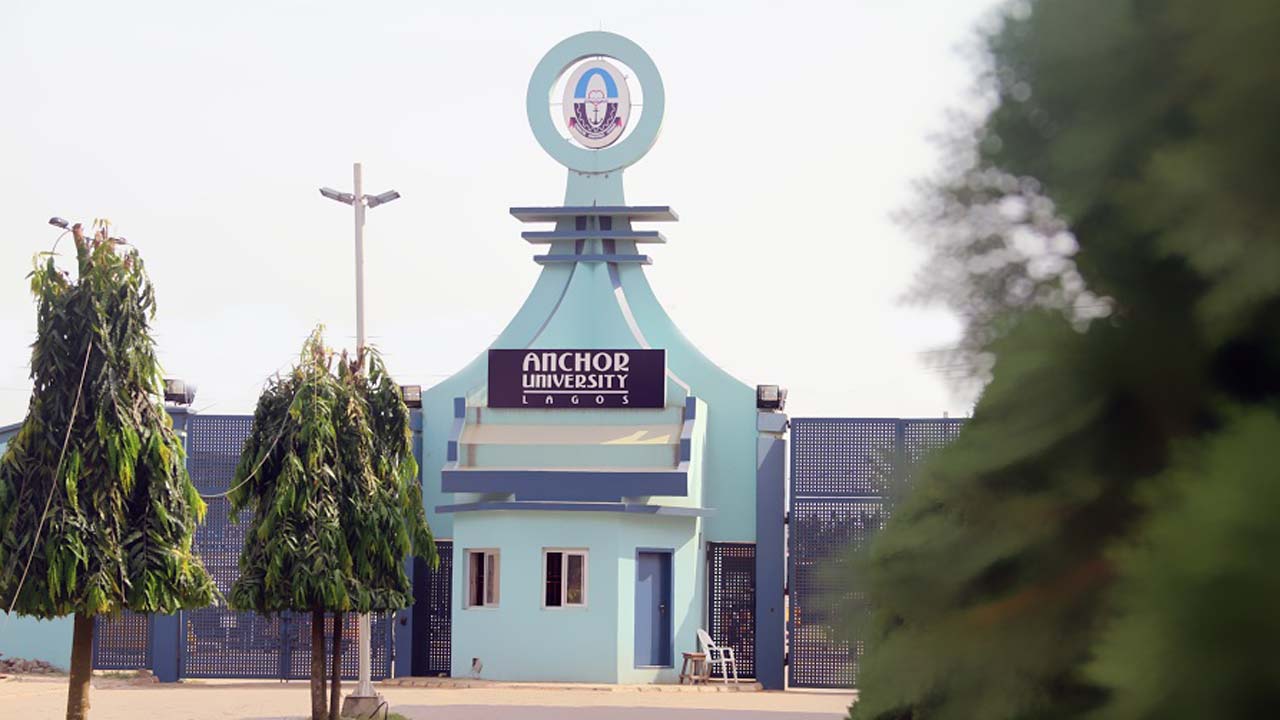
One of the foundation faculties of Anchor University, with fully NUC-accredited programmes in the biological, chemical, computing, earth, mathematical and physical sciences.

Professor O. J. Ilori, Dean, Faculty of Science
Dean Welcome Message

It is with great pleasure that I welcome you to the Faculty of Science, Anchor University, Lagos. The Faculty of Science is the bedrock of innovation, discovery, and problem-solving. Science involves making careful observations, performing experiments, and testing ideas against real-world evidence. It is the process of discovery and the body of knowledge. Science is the language with which we proffer solutions to the challenges of humanity.

In line with the University's philosophy to train the total man to face the challenges in a dynamic world, thus subduing the world in obedience to his creator, we promote effective teaching, learning and research to produce graduates who will use their acquired knowledge in science to solve the world's social, economic and ecological problems. Our graduates are globally relevant in industry, academia and government. The faculty plays an active role in fostering a more entrepreneurial mindset among students, makes significant contributions to research in several areas of science, and trains the next generation of scientists, researchers, and leaders who will drive national and global development.

Prospective students: you have chosen a path of impact. Science is the engine of progress, and your training here will prepare you to lead in academia, industry, and public service. Current students: you are the future of science. Engage fully, ask questions, and make the most of the opportunities available to you.

Please explore our website and learn more about our departments, programmes, research, and achievements. Once again, welcome to the Faculty of Science. Where Knowledge Meets Impact.

Professor O. J. Ilori

Dean, Faculty of Science

Professor O. J. Ilori (B.Sc., M.Sc., Ph.D., OAU, Ile-Ife) is a Professor of Plant Physiology and Botany in the Department of Biological Sciences, appointed Dean in August 2022, with over 19 years of university teaching, research and administrative experience. His research covers plant physiology and biochemistry, cellular and molecular plant biology, environmental plant physiology, electrophysiology and stress physiology (high and low temperature, salinity and flooding stress, and molecular and physiological characterisation of crop responses), photosynthesis and water relations, seed dormancy and signal transduction, post-harvest physiology of horticultural crops, and medicinal plant conservation; his current work is on the physiological responses of indigenous crops to climate stress. He served as Head of the Department of Biological Sciences (2017–2022), as level adviser and examination officer, and as chairman and member of Council, University Senate and Faculty committees. He has supervised over 50 undergraduate projects, presented papers at conferences, and has over 40 peer-reviewed publications and 5 book chapters, is a member of the Botanical Society of Nigeria and the Nigeria Field Society, and is currently the Chaplain of the Anchor University Chapel.

+Vision

The faculty is poised to prepare students for academic excellence with requisite training in the acquisition of moral, social, physical and entrepreneurial skills, among others.

+Mission

To impart the necessary knowledge, attitude and skills that would enable graduates to become self-reliant practitioners, leaders with godly integrity and researchers with global relevance.

About the Faculty

About the Faculty of Science

The Faculty of Science is one of the foundation Faculties of Anchor University, established at the inception of the University in the 2016/2017 academic session to provide middle and high-level manpower in the sciences. It started as the Faculty of Natural and Applied Sciences, with Biology and Microbiology (Biological Sciences), Biochemistry and Chemistry (Chemical Sciences), Computer Science and Mathematics (Mathematical Sciences), and Physics.

Following the growth in staff strength, student population and NUC accreditation requirements, it became the Faculty of Science and Science Education, later the Faculty of Natural, Applied and Health Sciences, and was named the Faculty of Science in 2023.

From an initial enrolment of fewer than 80 students, the faculty now has over 600 undergraduate and postgraduate students and over 60 academic staff, including Professors. The faculty has full accreditation for all its programmes by the National Universities Commission (NUC), and remains central to the University's mission of teaching, research and community service.

The faculty runs Postgraduate Diploma (PGD), M.Sc., M.Phil. and Ph.D. programmes in Microbiology and Computer Science.

Philosophy

To train the total man to face the challenges in a dynamic world, thus subduing the world in obedience to his creator, and to produce graduates who are sound in knowledge of science and capable of applying scientific principles to solve societal problems.

Our goals

  • To train globally competitive scientists and provide solutions that address societal challenges.
  • To provide quality education geared toward the training and development of the total person rightly disposed to God, self and others; to the natural, the technological, the political and the socioeconomic environment.
  • To promote academic excellence through trailblazing teaching, research and community service with strong international linkages which will enhance acquisition of practical skills in technology and sciences.

Undergraduate admission

The minimum entry requirements for undergraduate programmes are credit level passes in five (5) subjects at the Ordinary Level examination of WAEC, NECO or any other equivalent certificate, including English Language, Mathematics and three (3) other relevant subjects, in not more than two (2) sittings. Candidates must also sit for the UTME of the Joint Admissions and Matriculation Board (JAMB) and attain the prescribed cut-off score. Some requirements are specific to a department or programme.

Students can also be admitted through Direct Entry to 200 level through JUPEB, Diploma programmes, IJMB, A-Level and other equivalent programmes. A student can transfer from another university to Anchor University, but not beyond 300 level. The minimum entry requirement for Direct Entry is as determined by the institution from time to time.

Course categories

  • Core or compulsory courses: courses that students must offer unconditionally and pass.
  • Required courses: courses registered for at departmental level that must be passed.
  • Elective or optional courses: courses that may be offered to make up the minimum number of credit units required to graduate.
  • Pre-requisite courses: courses that students must take and pass before taking a particular course at a higher level.

Achievements and research focus

Current research interests include Plant Biochemistry and Molecular Biology, Structural Biology, Stress Physiology, Nanotechnology, Cellular Parasitology, Environmental Microbiology, Public Health, and other emerging areas of the biological sciences, as well as geophysics, atmospheric physics, meteorology, ionospheric and radio propagation physics, space physics, solar energy studies, solid state physics, material science, solar radiation physics, plasma physics, computational physics, nuclear and particle physics, atomic and molecular collisions, and theoretical physics.

Milestones include active collaboration with the Indian Centre for Space Physics (ICSP) and the German Aerospace Centre (DLR). The faculty has a team of highly qualified, experienced, and dedicated academic and technical staff, and laboratories equipped with state-of-the-art equipment for research in the different fields of science.

Students' life

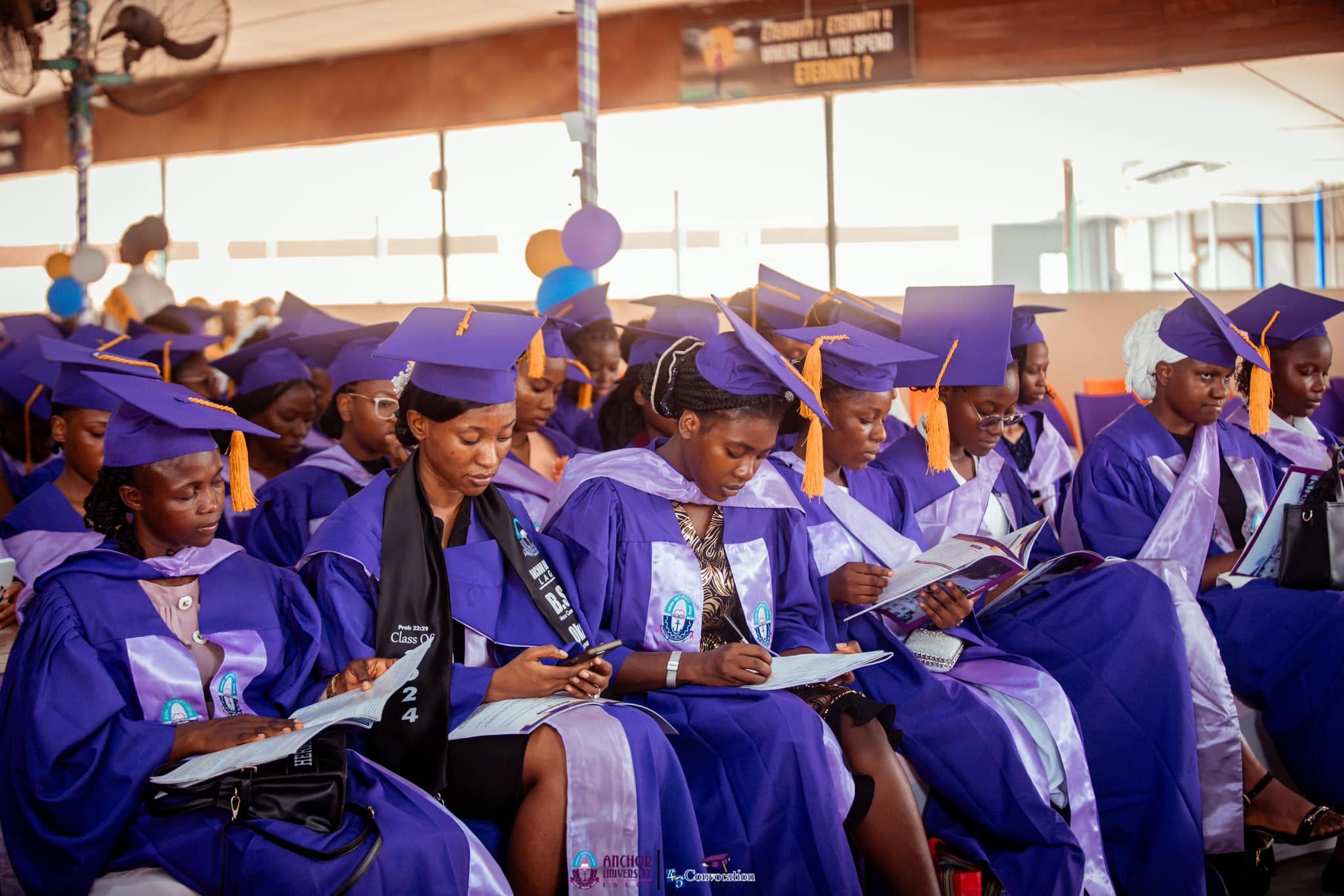
Students balance lectures, practical labs, and independent reading outside of scheduled hours, and success relies on organising personal timetables to meet assignment deadlines. Libraries, student cafes, and ICT centres serve as the main hubs for group projects and individual focus.

  • Spiritual life: students are brought together for worship, spiritual nurture and education on relevant issues of life.
  • Community Development Initiative: all students are expected to take part, with outreach to orphanages, remand homes, hospitals, prisons and more.
  • Students' associations: students are encouraged to join associations that contribute to the academic and social life of the University, explore hobbies and develop leadership skills. Sports competitions are encouraged.

Ready to Begin Your Journey?

Admissions for the 2026/2027 academic session are now open. Take the first step towards a brighter future at Anchor University Lagos.